
Black EPDM Roof Systems in Flint, MI
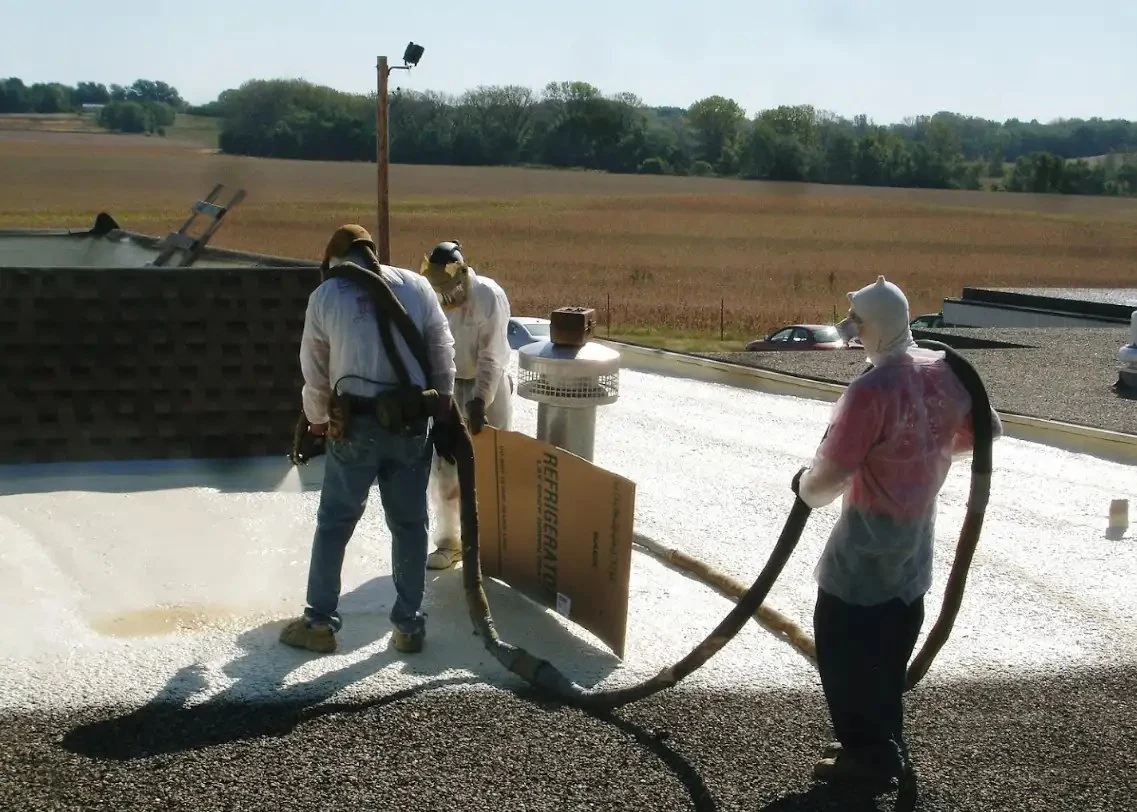
Black EPDM: Reading What's Already on Half of Flint's Older Roofs
A large share of the flat roofs we inspect around Genesee County are already black EPDM, put down in the 1980s and 1990s when it was the default membrane for the region's commercial buildings. Before we talk about replacing anything, we look hard at whether that existing membrane still has service life left in it.
Why So Much of Flint's Stock Is Already EPDM
EPDM was the standard low-slope membrane through the era when a lot of Genesee County's strip retail, small manufacturing bays, and converted warehouse space along Dort Highway and Van Slyke Road got their roofs. It is a single-ply rubber sheet, seamed with adhesive tape or liquid splice rather than heat-welded, and a properly maintained EPDM roof can run decades past when a poorly maintained one starts failing at the seams.
That means our first call on an EPDM roof is rarely 'replace it.' It's an inspection: how many seam splices are original, how many have already been patched, whether the membrane is still pliable or has gone brittle and shiny, which is the visual sign that the plasticizers have weathered out of the rubber.
Where Black EPDM Actually Fails First
Field membrane on EPDM rarely fails outright. Seams do. A lap splice that was taped decades ago and never re-primed loses adhesion at the edges long before the sheet itself develops a hole, and that's where water gets in around parapets, curbs, and old pitch pockets that were never updated to current flashing methods.
On older buildings we also find EPDM patched over EPDM in the same spots repeatedly, a sign that whatever is driving the original failure, ponding, a low drain, movement at a curb, was never actually fixed, just covered again. We flag that pattern before quoting another patch on top of it.
Heat Gain, Ice Damming, and the Dark-Membrane Trade-Off
Black EPDM absorbs heat, which helps shed light surface snow faster than a white membrane does in early winter, but it also means uneven melt across the field: snow near a warmer HVAC curb melts and refreezes at a colder parapet edge a few feet away. That cycle is what drives ice damming on older EPDM roofs more than the membrane color by itself.
We check parapet flashing and coping seams closely on black EPDM roofs headed into winter, because that's where meltwater refreezing at the edge does its damage, not usually in the open field.
What a Seam-Focused Inspection Covers
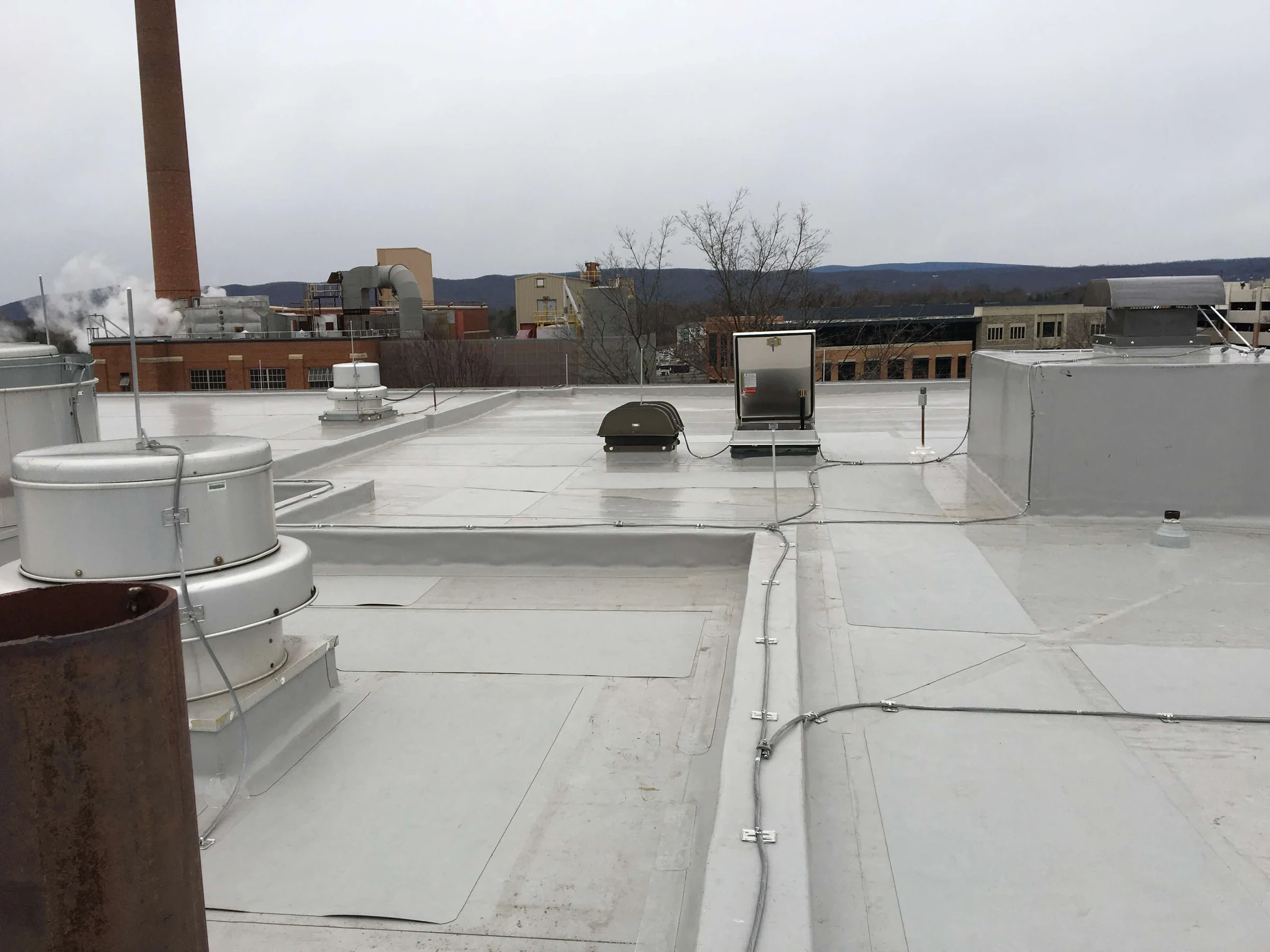
An EPDM inspection is mostly a seam inspection, since that's where the membrane actually fails. We walk every accessible lap by hand, checking adhesion rather than just looking for obvious lifted edges, because a seam can look intact from a few feet away and still have failed adhesion underneath.
The list below is what gets documented on every EPDM inspection report we write, whether the roof is headed toward a patch job or a full recover.
- Lap splice adhesion at every accessible seam
- Membrane flexibility versus brittleness across the field
- Pitch pocket and penetration seal condition
- Parapet coping and edge metal fastening
- Ponding patterns and drain function
- Patch history at repeated failure points
Patch, Re-Seam, or Replace: How We Decide
If the field membrane is still flexible and the failures are isolated to specific seams or penetrations, re-seaming and targeted patching is the honest recommendation, and it costs a fraction of a full tear-off. If the rubber has gone brittle across large sections, or the roof already carries a second membrane generation under it, patching stops being a real fix and we say so plainly.
This restoration-first approach matters more here than in a lot of markets, because Genesee County's older commercial buildings often carry uncertain resale value, and owners are frequently better served stretching a sound EPDM roof another several years than financing a full replacement on a building they may not hold long term.
Replacing EPDM When It's Actually Time
When an EPDM roof is genuinely at the end of its service life, wide-scale seam failure, saturated insulation confirmed by core cuts, or a deck showing soft spots, we replace it as EPDM or move to a different membrane depending on the building's use and drainage. That decision comes from what the cores show, not from a default assumption that EPDM should be swapped for something newer just because it's older technology.
If the deck itself needs repair, replacement is also the point where we address drainage design flaws, adding tapered insulation crickets or improving scupper capacity, that a re-seam or patch job could never have solved on its own.
Common Questions on Older EPDM Roofs
How do I know if my EPDM roof needs replacing or just re-seaming?
We check whether the membrane is still flexible or has gone brittle, and whether failures are isolated to specific seams or spread across the field. Isolated seam failures on flexible rubber usually mean re-seaming and patching, not replacement.
Why does my black EPDM roof keep leaking at the same spot?
Repeated patching in one location usually means the underlying cause, a low drain, ponding, or movement at a curb, was never addressed. We look for that root cause before recommending another patch in the same place.
Does black EPDM cause more ice damming than a white membrane?
The dark surface melts snow unevenly across the field, which can push meltwater toward colder edges where it refreezes. Parapet and edge-metal condition matters more to ice damming than the membrane color alone.
Can an old EPDM roof still qualify for a warranty after a patch job?
A patch or re-seam typically carries a workmanship warranty on the repair itself rather than a new manufacturer warranty on the whole roof. A full recover or replacement is what restarts a manufacturer warranty term.
Is it cheaper to patch EPDM than replace it?
Usually, if the field membrane still has service life left. We'll tell you honestly when patching has stopped being cost-effective, which is when the failures are wide enough that another round of repairs is just delaying the same decision.
Related
Ready to review the roof scope?
Let’s Talk About Your Commercial Roof
Share the building, roof history, known leaks or damage, access constraints, and schedule. We’ll start with the roof condition and the facility below it.