
SBS Modified Bitumen Roofing in Flint, MI
SBS Modified Bitumen: Why It Still Holds Up on Flint's Smaller Roofs
SBS modified bitumen shows up constantly on Genesee County's smaller commercial roofs, strip retail on Court Street, small office buildings converted from older houses, and multi-tenant plazas that got a roll-roofing system decades ago and have been patched ever since. It's still a sound spec on the right building.
Why SBS Instead of APP in This Climate
The two common modified bitumen chemistries, SBS and APP, behave differently in cold weather. SBS is a rubberized polymer that stays flexible at low temperatures, which matters directly in Michigan where a membrane has to move through a real freeze-thaw range every single winter without cracking. APP, a plastic-modified chemistry, gets stiffer in the cold and tends to be a better fit for warmer climates than ours.
That's why nearly every modified bitumen job we spec around Flint is SBS. The flexibility isn't a marketing point, it's the difference between a membrane that can absorb thermal movement at a parapet or curb through January and one that starts cracking at the same details a few winters in.
Application Methods: Torch, Cold-Adhesive, and Self-Adhered
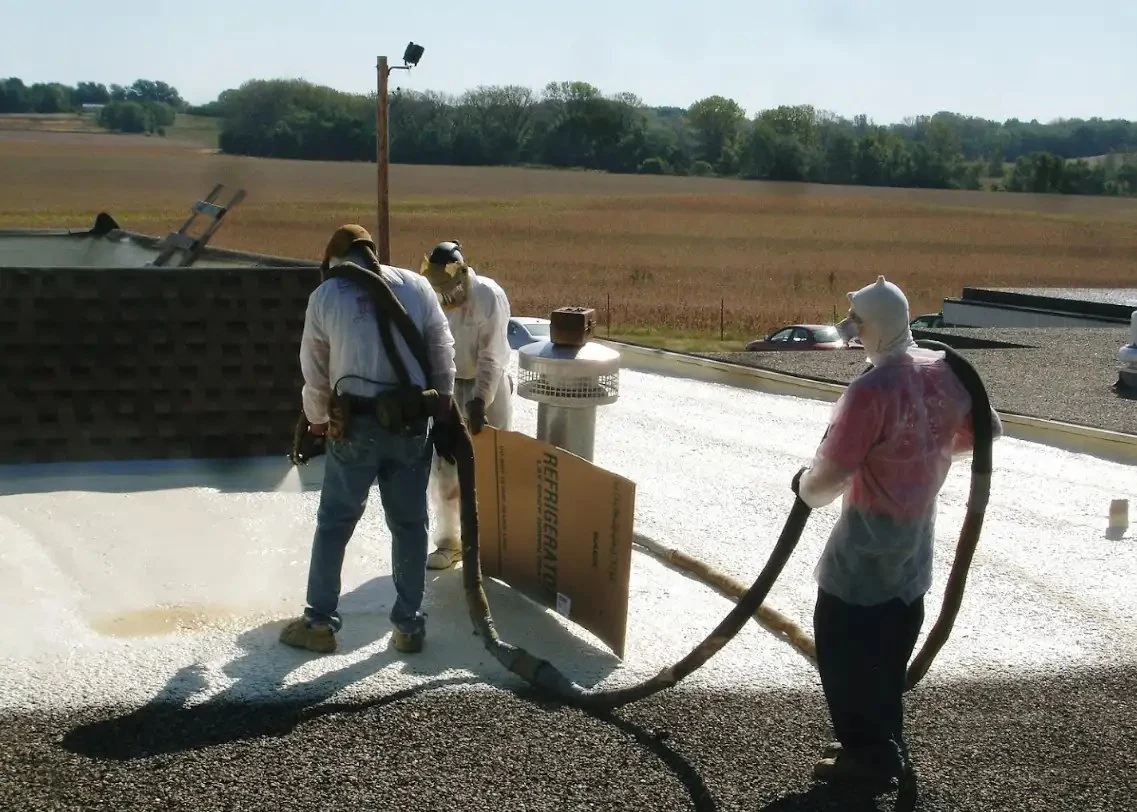
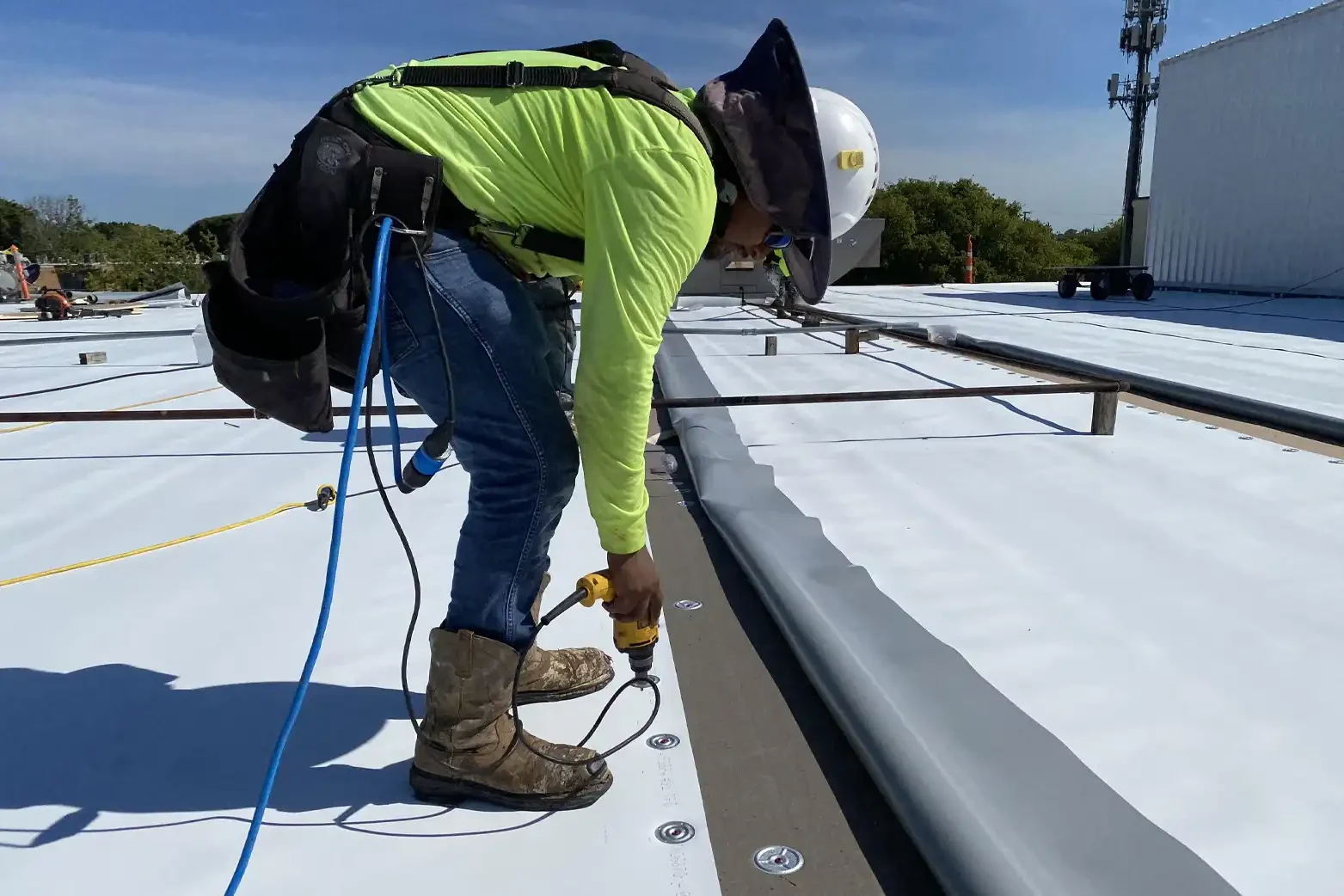
SBS can go down torch-applied, heat-welding the modified bitumen's asphalt coating to fuse laps, or cold-process, using adhesive rather than open flame. On occupied buildings, especially multi-tenant retail with businesses operating below during the work, we lean toward cold-adhesive or self-adhered systems specifically to avoid the fire risk and smoke that comes with torch application over an active roof deck.
Torch application still has a place on isolated, non-occupied structures where it's the more cost-effective and faster method, but we make that call building by building rather than defaulting to one application method across every job.
Multi-Ply Assemblies and Older Roof Layering
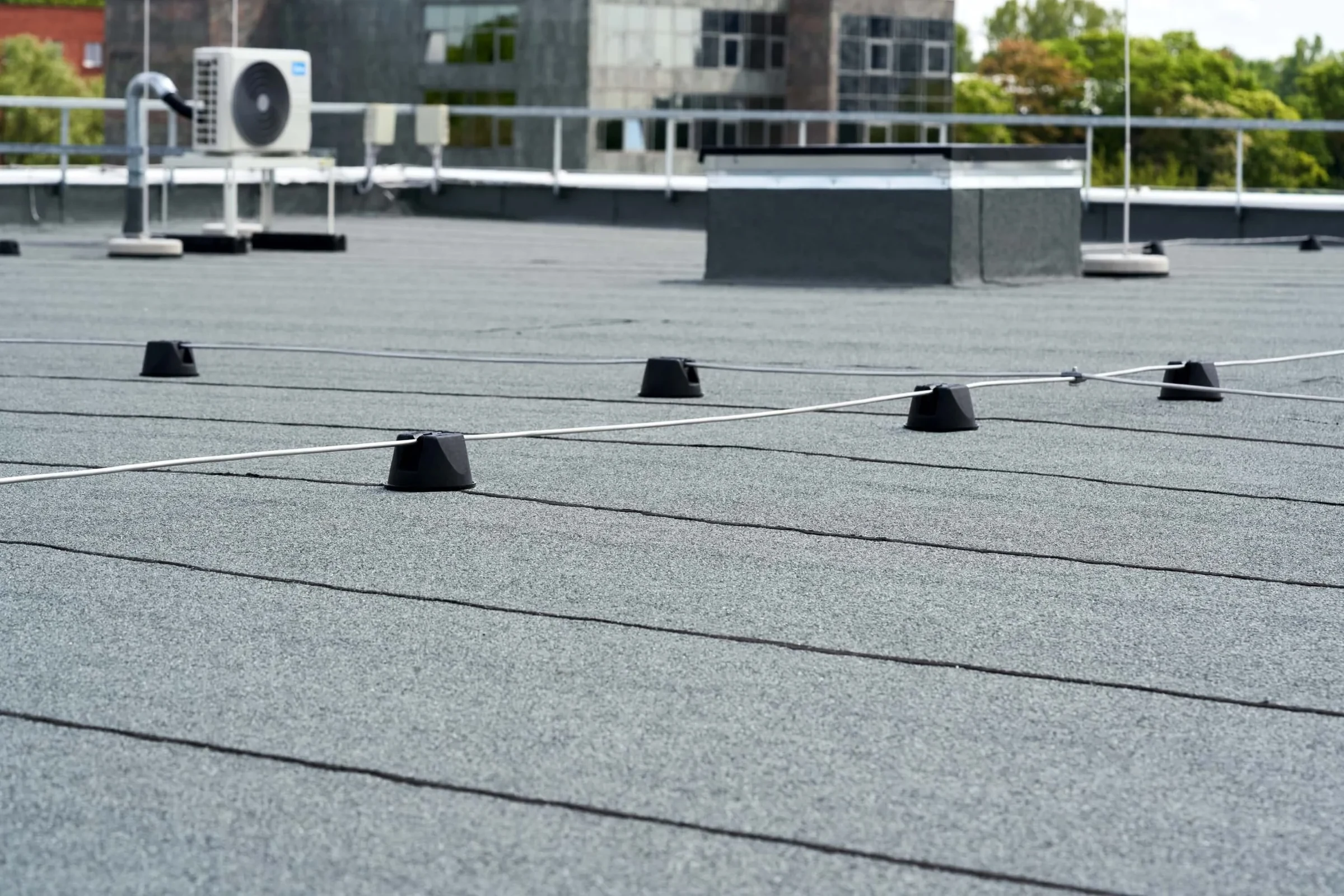
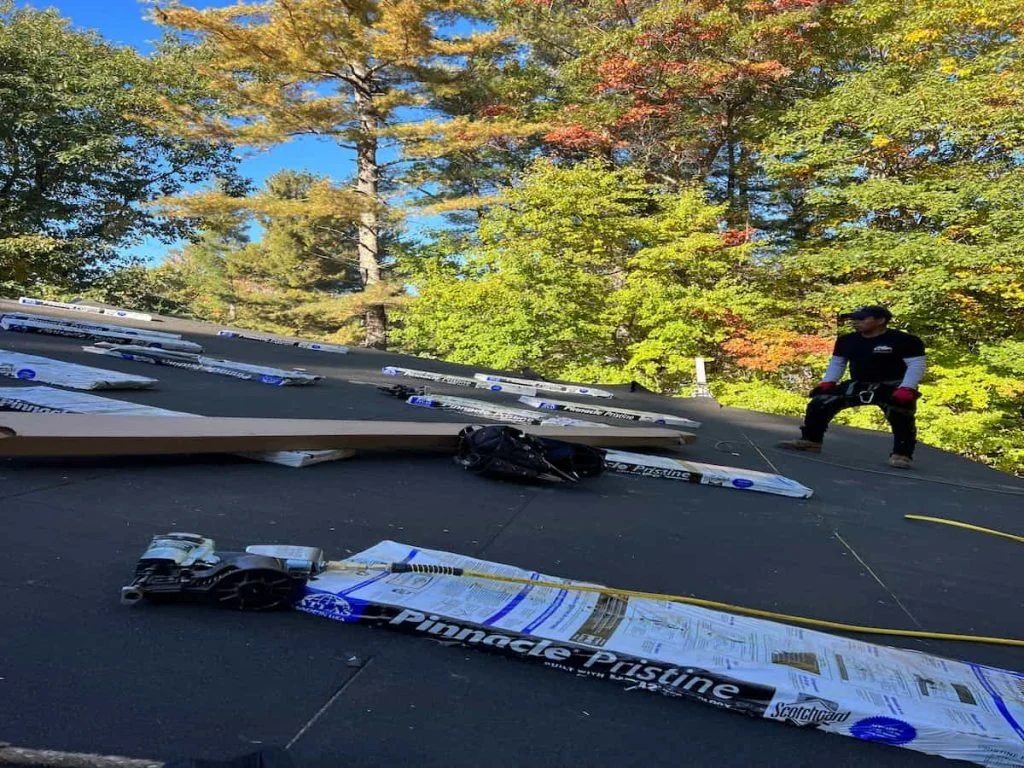
Most SBS jobs go down as a two-ply system, a base sheet mechanically fastened or adhered to the deck, then a cap sheet layered over it with staggered seams so no single joint runs straight through both plies. On Flint's older buildings, that base ply often gets installed directly over an existing built-up roof once we've confirmed the substrate is dry and stable, which is one of the more cost-effective recover paths available on a small commercial roof.
Staggering the seams between plies is what actually keeps water from finding a straight path through the assembly, so we plan the cap sheet layout specifically to offset every base-ply joint rather than running both layers in the same pattern.
Granule Surfacing, UV, and Long-Term Weathering
The mineral granules embedded in an SBS cap sheet are the roof's actual UV shield. Once foot traffic, hail, or age wears a bald patch into the granule layer, the asphalt underneath is exposed directly to sunlight and weathers far faster than the surrounding surfaced field, which is why granule loss is one of the first things we flag on an aging SBS roof.
We check granule coverage as part of every inspection rather than only at obvious wear points, since granule loss around a rooftop unit's service path or a scupper opening tends to show up before it's visible from ground level.
- Seam lap width and fusion quality at each ply
- Base flashing height at parapets and walls
- Granule coverage and areas of bare, exposed asphalt
- Ponding water locations and duration after rain
- Drain strainer condition and scupper clearance
- Patch history clustering by roof zone
Ponding Water and Flat-Roof Drainage on Small Buildings
A lot of the older strip retail buildings we work on were built with minimal roof slope, sometimes none, which means ponding water is a constant maintenance issue rather than an occasional one. SBS with a granule cap handles standing water better than raw asphalt felt, but chronic ponding still accelerates aging at the surface and increases the odds of a seam failure at a low point.
Where a roof's drainage was clearly under-designed from the start, we talk to owners about tapered insulation crickets during a recover rather than just replacing membrane in the same flat configuration that caused the ponding in the first place.
What We Check on an SBS Roof Inspection
Beyond seam integrity, we look at flashing at every wall termination, base flashing height relative to the field membrane, and whether granule loss has exposed bare asphalt to direct UV. On buildings that have had multiple patch campaigns over the years, we also map where those patches sit, since clustered patches in one area almost always point to a drainage problem rather than random membrane failure.
We write that inspection up as a specific document, not a verbal summary, so an owner has something concrete to compare against the next inspection and can track whether a given problem area is getting worse or holding steady.
SBS Modified Bitumen: What Owners Want to Know
Why does my roofer recommend SBS instead of APP modified bitumen?
SBS stays flexible in cold weather; APP tends to stiffen. Michigan's freeze-thaw cycles make SBS the more reliable choice here, since a membrane that can't move with temperature swings is more likely to crack at flashings over time.
Is torch-applied roofing safe on an occupied building?
It can be done safely with proper fire watch procedures, but on multi-tenant buildings with businesses operating below, we generally prefer cold-adhesive or self-adhered SBS to avoid the open-flame risk altogether.
Can SBS be installed over my existing built-up roof?
Often yes, as a recover, once we've confirmed the existing surface is dry and stable enough to serve as a base for the new plies. We check that with core samples before recommending it.
Why does my flat roof keep collecting standing water?
Many older small commercial buildings were built with little or no roof slope. SBS handles ponding better than plain asphalt felt, but the real fix for chronic ponding is often adding tapered insulation to actually move water toward the drains.
How long does an SBS modified bitumen roof typically last?
Well-installed and maintained SBS systems commonly run two to three decades, with service life driven more by drainage, flashing quality, and granule condition than by the base membrane chemistry alone.
Related
Ready to review the roof scope?
Let’s Talk About Your Commercial Roof
Share the building, roof history, known leaks or damage, access constraints, and schedule. We’ll start with the roof condition and the facility below it.