
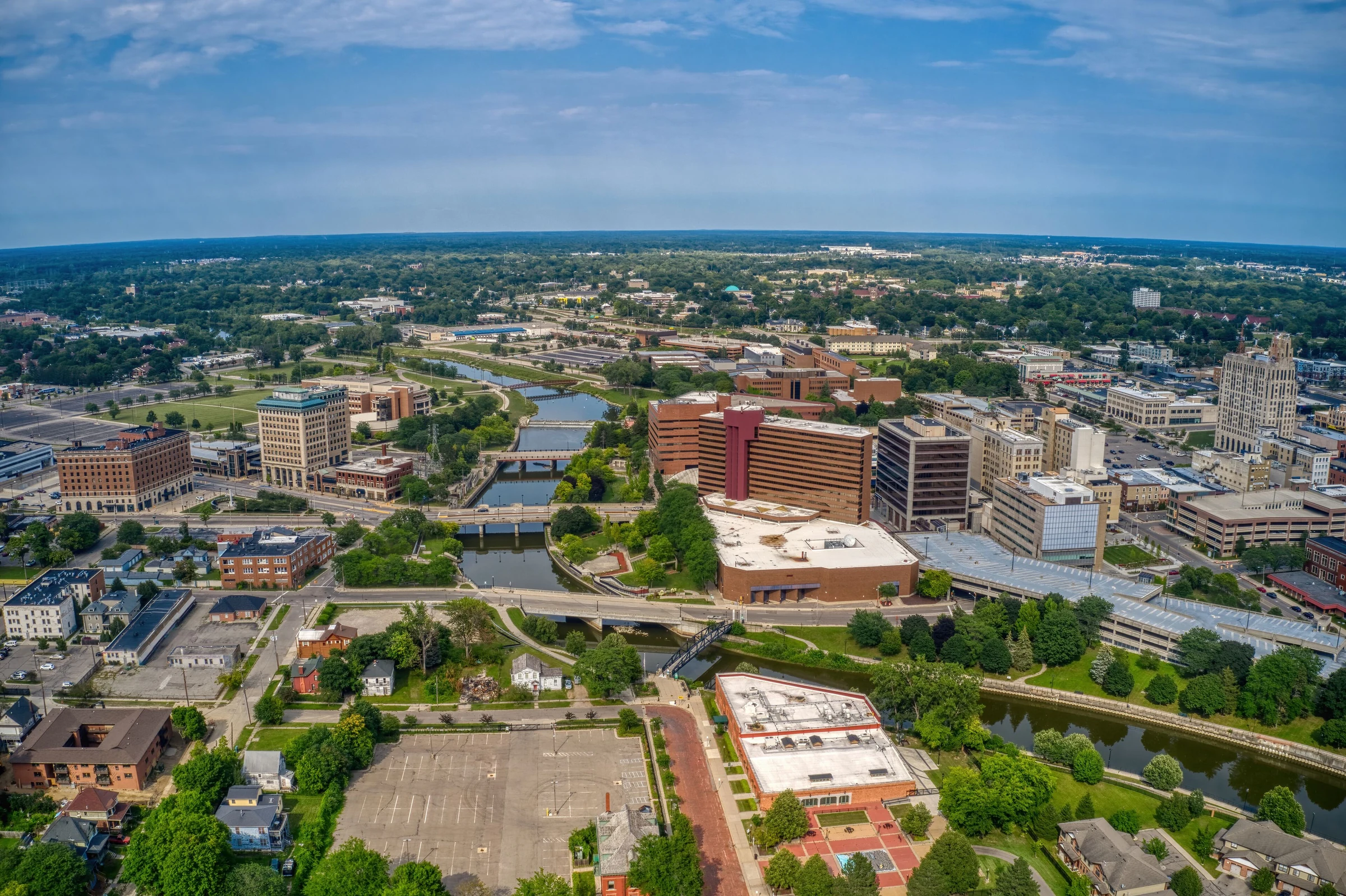
Commercial Roofing Contractors Mount Morris, MI
Commercial Roofers in Mount Morris
Commercial roofing in Mount Morris should begin with a documented assessment of membrane condition, seams, flashings, drainage, penetrations, and moisture before repair, coating, or replacement is selected. Mount Morris sits just off I-75 north of Flint, and its commercial buildings split into two groups: the small retail strip along Saginaw Street that predates the interstate, and the newer buildings that grew up near the interchange to catch highway traffic. We see roof problems from both eras on the same street.
Saginaw Street's Older Retail Roofs
The storefronts along Saginaw Street through Mount Morris are mostly older flat-roof buildings, single-story retail with built-up or modified-bitumen roofing that has been patched over multiple ownership changes. Records on these buildings are often incomplete, so the first step is usually a core cut to find out how many layers are actually up there before quoting a recover or a tear-off.
Many of these storefronts also share a roof edge or parapet with the building next door, which means drainage and flashing decisions rarely stay contained to one tenant's roof.
That shared condition also means timing matters. A recover on one storefront can change how water moves across a shared parapet, so we look at the whole row before finalizing a scope on any single unit.
Newer Buildings Near the I-75 Interchange
The buildings that went up closer to the interchange tend to be newer construction with TPO or EPDM single-ply roofs, generally in better shape but not immune to problems, fastener backout, seam failure at rooftop unit curbs, and membrane damage from service technicians walking equipment paths without protection are what we find most often.
Traffic noise and highway visibility also make these roofs a priority for owners in a different way: a visible ponding stain or a sagging section is a marketing problem as much as a maintenance one, and owners near the interchange tend to move faster on repairs than owners on the older side of town.
Warranty coverage also comes up more often on this side of town. Buildings put up in the last fifteen years are more likely to still be inside a manufacturer's warranty period, so we check that before proposing any repair that could affect the coverage, rather than finding out after the work is done.
Churches and Small Schools in Town
Mount Morris has a handful of church buildings and small school facilities that combine steep-slope sanctuary or gym roofs with flatter additions. Those transition points, plus older steeple and tower flashing, account for most of the leak calls we get from this group.
We work around service schedules and school hours on these jobs, staging materials and running noisy work during windows that do not interrupt the building's actual use.
Steeple and tower flashing in particular gets missed on a lot of roof inspections because it sits above the main roof line and does not always get walked during a routine visit. We check it specifically on church buildings, since a failure there can send water into the sanctuary ceiling long before the main roof shows any sign of trouble.
Signs a Mount Morris Roof Needs Attention
A few conditions tell us a roof needs more than a patch, regardless of which side of town it is on:
- Ceiling stains that reappear after being painted over
- Ponding water that takes more than 48 hours to drain
- Cracked or alligatored surfacing on older built-up roofs
- Lifted or open seams on single-ply membrane
- Rusted or separated flashing at parapets and curbs
- Visible sagging between roof structural members
Any one of these can point to a manageable repair. Two or three together usually mean the roof is past the point where patching makes financial sense, and we say so directly instead of stringing out repair calls on a system that is already failing.
Storm Response Along the Corridor
Wind and hail events that track along the I-75 corridor tend to hit Mount Morris and the surrounding townships together, and we treat those calls as a group rather than one building at a time. A hailstorm that damages a rooftop unit on one commercial building has usually done similar damage two blocks over.
After a storm, our first priority is stopping active water intrusion with a temporary dry-in, then documenting the damage with dated photos before any permanent repair starts. That record is what insurance adjusters and property owners both need to move a claim forward without a dispute over what the roof looked like before the storm.
Mount Morris Roofing Questions
How do you tell if roof damage is storm-related or wear-related?
Storm damage usually has a clear pattern, impact marks, torn membrane at the same wind-exposed edge, or displaced flashing tied to a specific date. Wear shows up gradually and unevenly across the roof instead.
Is recover an option for older Saginaw Street buildings?
Sometimes, if the deck is dry and sound and code allows another layer. We confirm both before recommending it over a tear-off.
Do rooftop units near the interchange cause extra wear?
Yes. Service traffic to HVAC equipment is one of the most common sources of membrane damage we find on buildings near the interchange, especially where there is no walk pad protecting the path.
How fast can you respond after a storm?
We prioritize active leaks and structural concerns first and schedule documentation visits as quickly as conditions allow, weather permitting.
What roof systems do you recommend for highway-visible buildings?
TPO and PVC single-ply hold up well and stay visually clean longer than older built-up systems, which matters for buildings that get highway visibility.
Related
Ready to review the roof scope?
Let’s Talk About Your Commercial Roof
Share the building, roof history, known leaks or damage, access constraints, and schedule. We’ll start with the roof condition and the facility below it.