
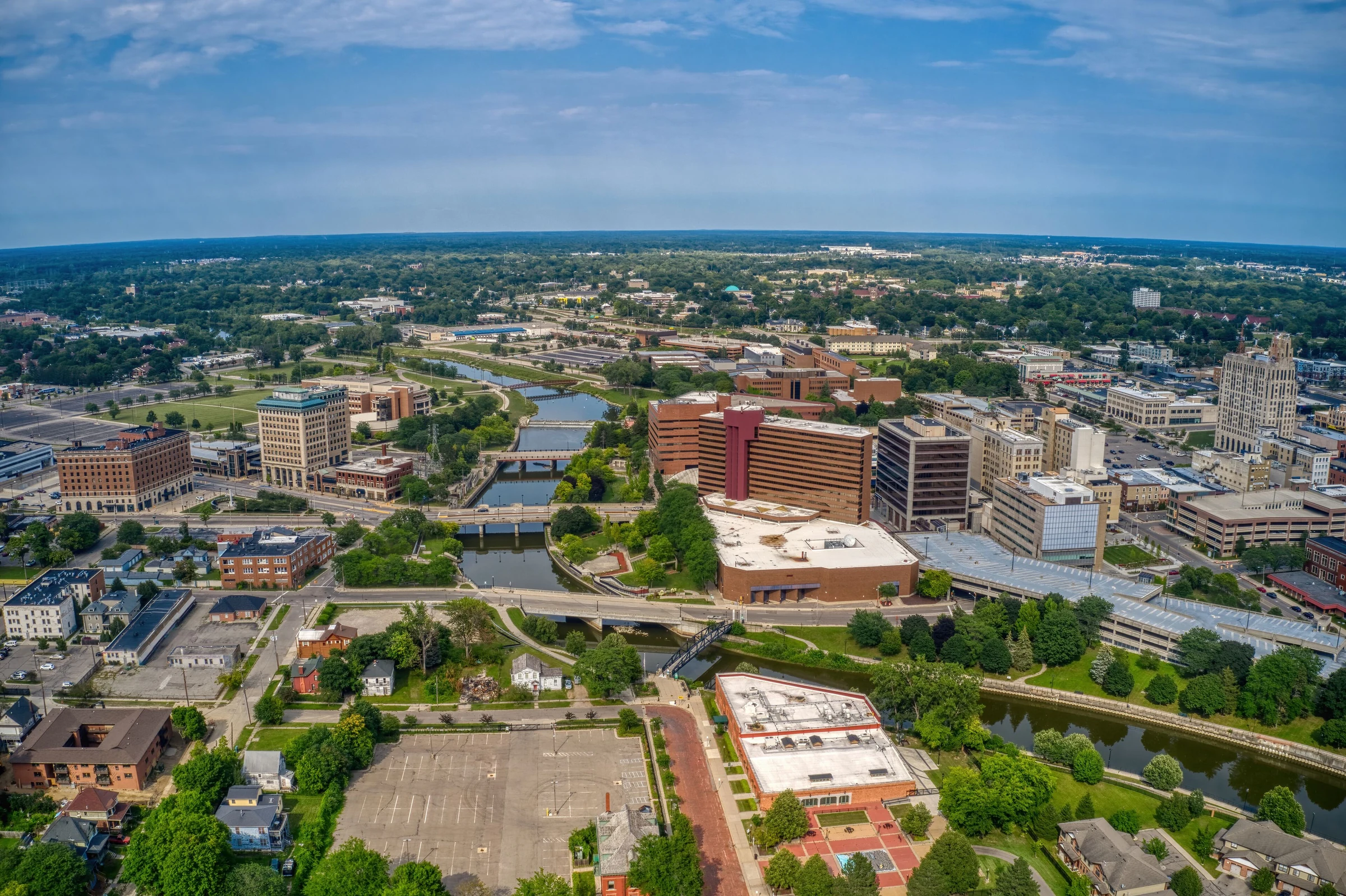
Commercial Roofing Contractors Burton, MI
Commercial Roofers in Burton
Commercial roofing in Burton should begin with a documented assessment of membrane condition, seams, flashings, drainage, penetrations, and moisture before repair, coating, or replacement is selected. Burton carries two roof economies that rarely get quoted the same way: the tier-two and tier-three auto supplier buildings strung along Bristol Road and Belsay Road, and the retail stretch that grew up around Courtland Center. One is built for production, the other for foot traffic, and the roof decisions on each follow different rules.
Supplier Plants on Bristol Road and Belsay Road
Most of the supplier buildings east of the city went up during the plant-expansion years of the 1970s and 1980s, steel deck under a low-slope membrane, meant to cover a production floor rather than to be looked at. Thirty and forty years later, a lot of that original built-up roofing has been recovered once already, sometimes twice, and the roof carries more penetrations than it started with: dust collector stacks, paint booth exhaust, compressed air lines, and rooftop units added as the plant retooled for different parts over the decades.
A leak on one of these roofs is rarely just a leak. Water dropping onto a stamping line, a paint booth, or palletized inventory turns a roof problem into a production problem inside of an hour, which changes what "urgent" means. Our first move on an active leak over production equipment is a dry-in that stops the drip path, not a full diagnosis, because the plant needs the ceiling protected before we start tracing the source back through old patch layers.
Recover versus full tear-off on these buildings usually comes down to core cuts. If the insulation under an old cap sheet is dry and the deck is sound, a recover buys real years at a lower disruption cost than tear-off. If the cuts show saturated insulation, we say so plainly and price the tear-off, because covering wet insulation with a new membrane just delays the same failure.
Retail Roofs Around Courtland Center
The mall and the strip centers around it carry a mix of roof ages and roof types under one shopping district: older built-up sections on the original anchor stores, modified bitumen on mid-life additions, and single-ply recover on whatever got redone most recently. Parapet walls tie a lot of these roof sections together, and the wall-to-roof transition behind the parapet is where we find the most repeat leaks, especially where roof drains sit close to a wall return.
Lease structure matters here as much as membrane type. In most of these centers the landlord owns the roof membrane and structure while individual tenants own their rooftop units and the curbs under them, which means our first job on a retail leak call is figuring out which side of that line the failure sits on before anyone signs a work order.
Restaurant tenants add grease exhaust penetrations, retailers swap out HVAC units on their own schedule, and each of those changes cuts into a membrane that was flashed for a different layout. We check curb flashing and walkway pad placement on every retail inspection because that is where tenant-driven changes tend to compromise the original roof detail.
What a Genesee County Winter Does to a Low-Slope Roof
Freeze-thaw cycling is the constant here, not the exception. A membrane that flexes fine in July gets brittle and stiff by January, and every seam, pipe boot, and parapet return takes that movement differently. Ice damming shows up at parapet edges and roof-to-wall transitions where snow melts from below and refreezes at the cold edge, backing water up under flashing that was never meant to hold standing ice.
Spring is its own problem. Snowmelt combined with clogged or undersized drains leaves ponding water sitting on flat sections for days at a time, and that ponding is exactly where our spring inspections find granule loss, blistering, and early seam failure. Summer brings the thunderstorm and hail risk that tests roof edges and exposed metal the rest of the year doesn't touch.
Documentation That Holds Up After the Storm
We photograph roof conditions before a crew ever mobilizes, and we keep those photos tied to specific damage locations rather than a general roof overview. A moisture scan or core cut backs up any claim that insulation needs replacing rather than just a membrane patch. That file is what a facilities manager, an insurance adjuster, or a corporate procurement office actually needs to move a claim or a capital request forward.
We don't promise a claim outcome, because that isn't ours to promise. What we control is whether the documentation reflects what the roof is actually doing, and we build every inspection report to stand up to that kind of scrutiny.
A typical inspection on a Burton supplier plant or retail building covers:
- Roof deck condition at drains, curbs, and penetrations
- Membrane seam and flashing integrity at parapets and wall transitions
- Insulation moisture content by core cut or infrared scan
- Rooftop unit curbs, condensate lines, and equipment support pads
- Edge metal and parapet coping condition
- Ponding water patterns after a rain event
- Prior patch and repair history where records exist
Scheduling Roof Work Around a Production Line
A supplier plant doesn't stop running because the roof needs work. Most of these facilities have short shutdown windows, model changeovers, or holiday closures that are the only realistic time to do anything beyond emergency repair, and we plan around that calendar rather than asking a plant manager to work around ours.
Retail work runs on a different clock, mostly after-hours or before opening, with loading dock access, customer safety, and tenant notice as the constraints instead of a production schedule. Either way, the roof plan has to fit the building's operation, not the other way around.
Questions Burton Building Owners Ask Us
How fast can you get a tarp on a plant roof that's leaking over production equipment?
Emergency dry-in is a same-day priority when water is actively threatening equipment or inventory. We stop the active leak path first and do the full diagnosis once the ceiling is protected.
Who's responsible for a roof leak at a Courtland Center-area retail space, the landlord or the tenant?
It depends on the lease and where the failure originates. Membrane and structure are typically landlord scope; rooftop units and their curbs are typically tenant scope. Our inspection identifies the failure point so that isn't a guess.
Does a recover system work on a roof that's already been patched for years?
Sometimes. If core cuts show dry insulation and a sound deck under the patches, recover can still make sense. If the cuts come back wet, we say so and price tear-off instead.
What happens if you find hidden moisture damage during an inspection?
We document it with photos and moisture readings and show you exactly where the damage sits before recommending repair scope, so the decision is based on what we found, not a guess.
Can roof work happen without shutting down the production line?
Often, yes, especially for section-by-section recover or repair work staged around active areas. Full tear-off on an occupied plant usually needs a shutdown window, and we plan the schedule around whatever window the plant actually has.
Related
Ready to review the roof scope?
Let’s Talk About Your Commercial Roof
Share the building, roof history, known leaks or damage, access constraints, and schedule. We’ll start with the roof condition and the facility below it.