
Roof Drains & Scuppers in Flint, MI
Drainage Problems Behind Most of the Leaks We Get Called For
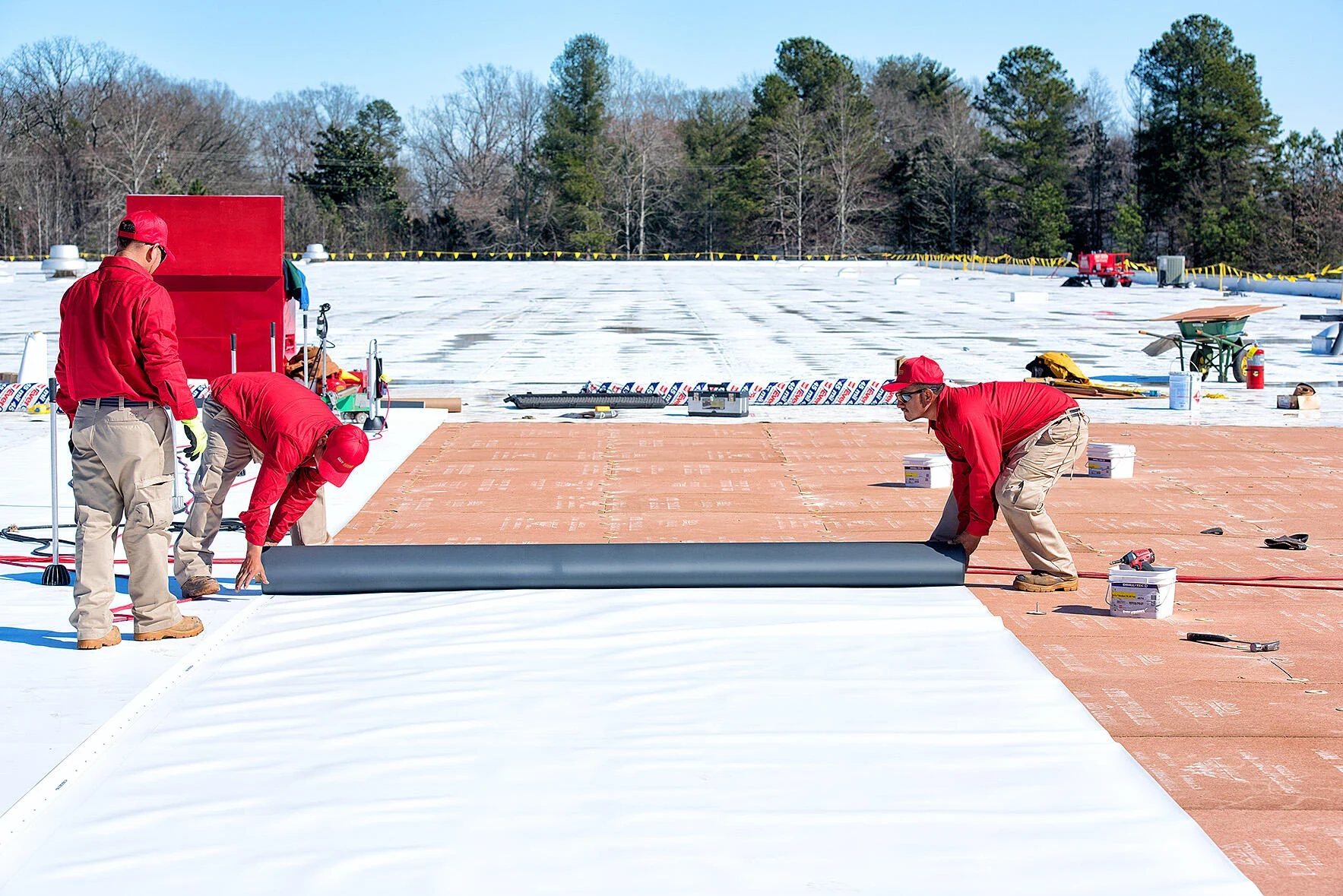
A flat roof doesn't fail because it's flat; it fails because water sits somewhere it shouldn't for longer than the membrane was built to handle. Roof drains and scuppers are the difference between a roof that sheds water in a few hours and one that's carrying standing water for days, and a lot of the leak calls we get trace back to a drainage problem rather than a membrane defect.
How Standing Water Actually Damages a Roof
Most commercial membranes can tolerate some ponding without immediate failure, but sustained standing water, beyond roughly 48 hours after rain, accelerates membrane aging, adds structural load the roof deck wasn't necessarily designed to carry long-term, and increases the odds of finding a weak seam or puncture before the water finally drains.
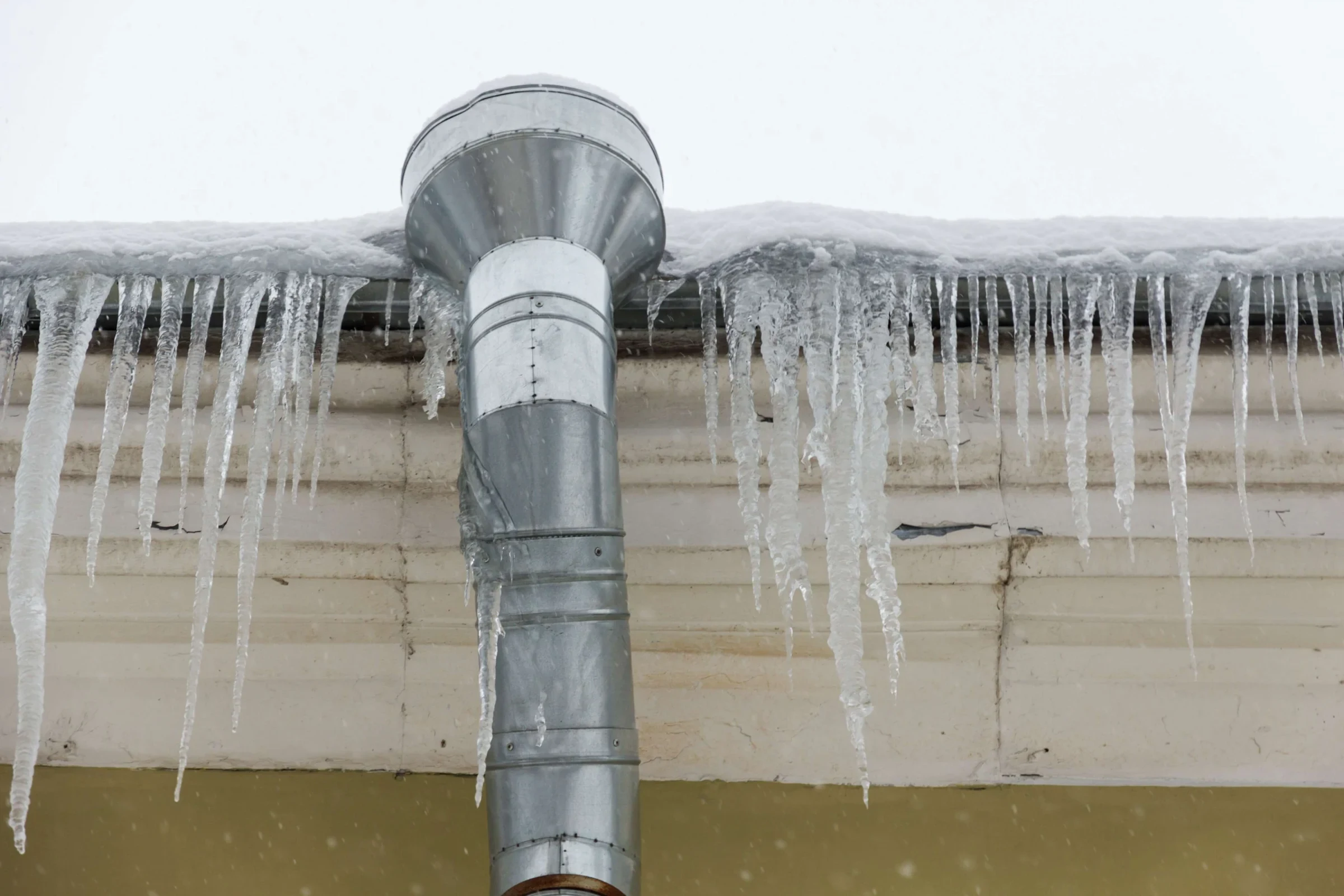
Winter makes this worse in Genesee County specifically: a roof section that ponds in spring and fall can freeze in winter, and repeated freeze-thaw cycling on a saturated membrane area is one of the faster ways to accelerate a leak that wasn't there the year before.
Interior Drains Versus Scuppers: Different Systems, Different Failure Modes
Interior roof drains carry water down through the building's plumbing system and fail most often from clogging: debris, roofing granules, or ice blocking the drain bowl or the strainer basket sitting on top of it. A clogged interior drain backs water up across a much wider area than people expect, since the roof slope that's supposed to carry water to that one point keeps directing more water toward the blockage.
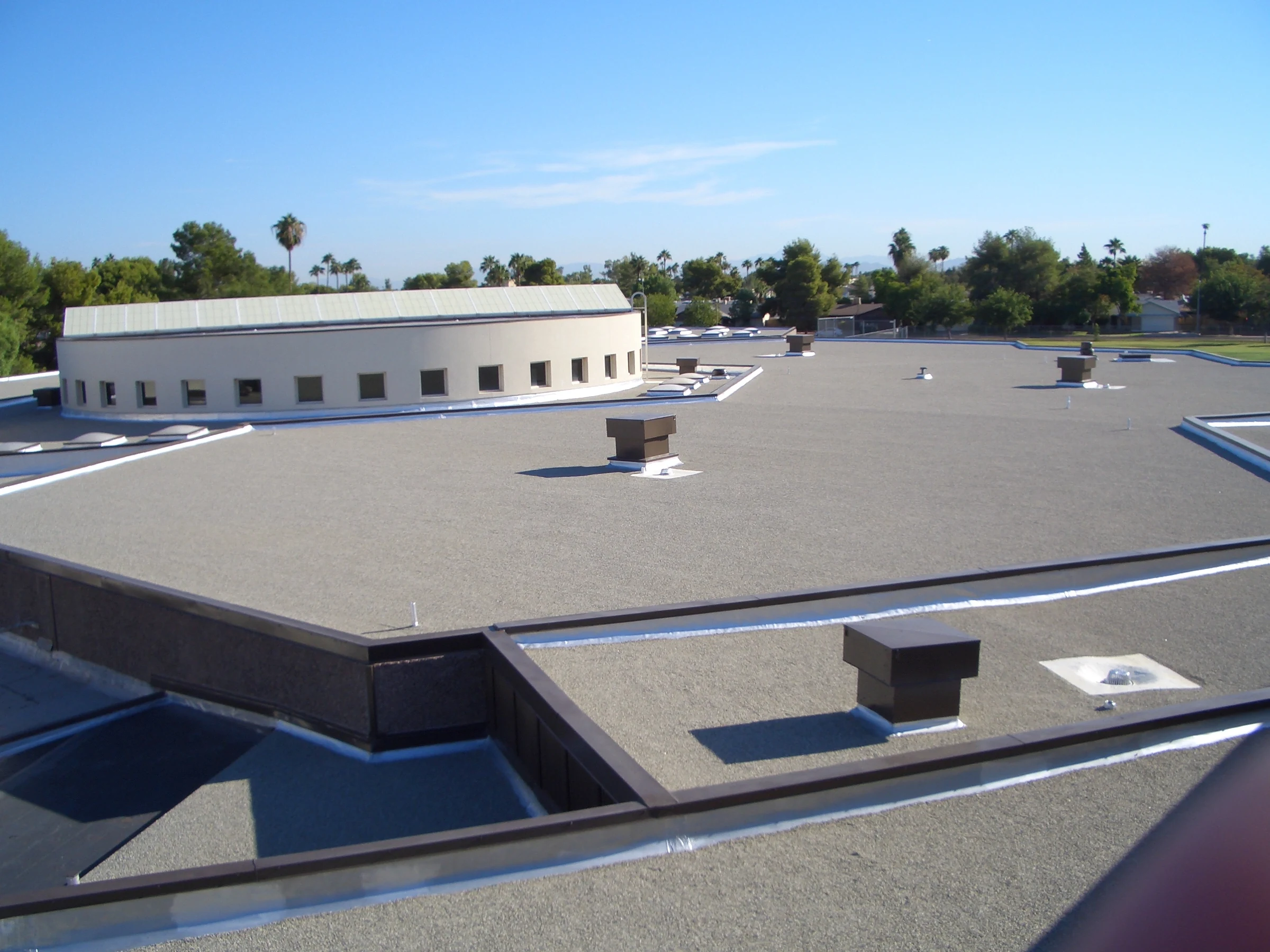
Scuppers, which drain water off the roof edge through the parapet wall, fail differently, usually from being undersized for the roof area they're serving, or from debris and ice blocking the opening itself. A scupper that was adequate when the roof was smaller or the drainage pattern was different after a renovation can become a chronic ponding source without anyone changing anything about it directly.
Diagnosing a Drainage Problem Before It Becomes a Leak
Standing water is visible days after a rain event if you know where to look, and we check drainage condition as a standard part of any roof visit:
- Time since last rain versus how much water is still visible on the roof surface
- Drain bowl and strainer basket condition, checked for debris and proper seating
- Scupper opening size relative to the roof area draining to it
- Roof slope near drains and scuppers, checking for low spots that have developed over time
- Downstream plumbing condition where accessible, since a clogged pipe below the roof surface causes the same symptom as a clogged drain
Roofs on a regular maintenance schedule catch drainage problems earlier simply because someone's checking this consistently instead of only after a leak shows up.
Fixing Chronic Ponding Without Just Clearing the Drain
Clearing a clogged drain solves the immediate blockage but doesn't fix a roof where ponding keeps recurring in the same spot after every rain. That pattern usually points to a low area in the roof deck or insulation that's developed over years of building settlement, membrane sag, or a roof that was never properly sloped to its drains in the first place.
Tapered insulation is the permanent fix for a chronic low spot, building up insulation thickness to redirect water toward the drain instead of letting it collect. It's a bigger scope than a drain clearing, but it's usually far cheaper to add during a planned reroof or recover than as an emergency fix after the ponding finally causes a leak.
Areas Where We See This Most Around Genesee County
Older flat-roofed retail and light industrial buildings, particularly ones that have had rooftop equipment added over the years, tend to develop new low spots as roof loads and traffic patterns change without the drainage getting reassessed. Buildings in lower-lying areas near Fenton and Linden's lakes-area terrain sometimes deal with slower site drainage generally, which can make roof-level ponding issues feel worse if downspouts are also fighting saturated ground below.
Spring snowmelt is a predictable stress test every year: a roof that drains fine during a normal summer rain can still pond for days when a heavy, fast snowmelt overwhelms drains that were partially blocked by ice all winter.
Roof Drainage Questions We Get
How long can water sit on a flat roof before it's a problem?
Most systems can tolerate ponding up to about 48 hours without immediate concern, but water sitting longer than that on a regular basis accelerates membrane wear and should get looked at.
Is a clogged drain usually the whole problem?
Sometimes, but not always. If ponding keeps recurring in the same spot after the drain's been cleared, there's likely a low spot in the roof itself that clearing alone won't fix.
What fixes a chronic low spot permanently?
Tapered insulation added during a reroof or recover is the standard permanent fix, since it corrects the slope rather than just keeping the existing drain clear.
Do scuppers need maintenance the same way drains do?
Yes. Debris and ice block scupper openings the same way they clog a drain bowl, and an undersized scupper can cause chronic ponding even when it's completely clear.
Does snowmelt cause different drainage problems than rain?
It can. A fast, heavy snowmelt puts more water on a roof at once than most rain events, and if drains are still partially ice-blocked from winter, that combination causes some of the worst ponding we see all year.
Related
Ready to review the roof scope?
Let’s Talk About Your Commercial Roof
Share the building, roof history, known leaks or damage, access constraints, and schedule. We’ll start with the roof condition and the facility below it.