
Johns Manville Roof Systems in Flint, MI
Johns Manville's Range Covers Both Ends of Flint's Roof Stock
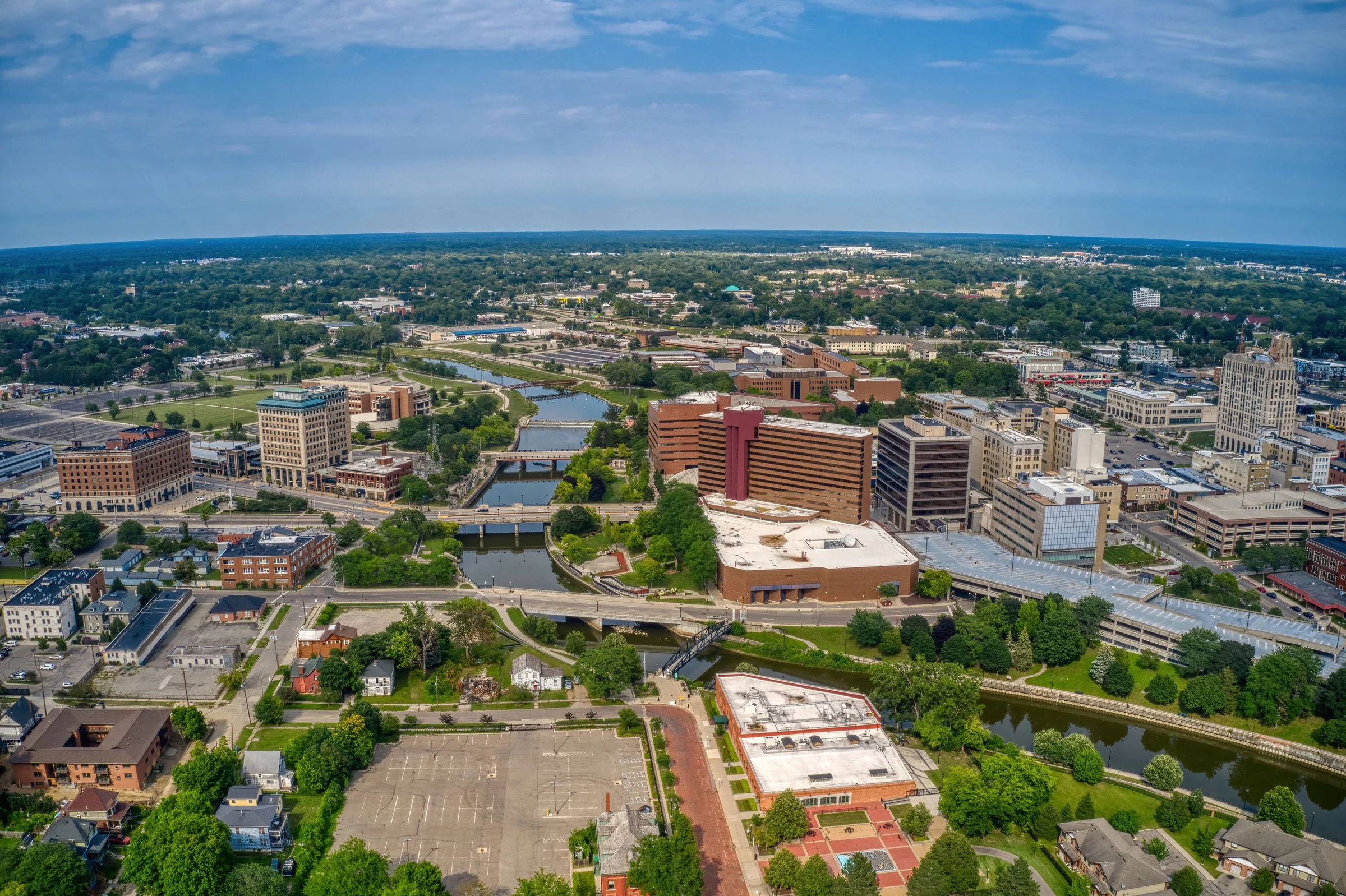
Johns Manville manufactures single-ply TPO and PVC as well as modified bitumen and built-up roofing components, a range that lines up well with a market like ours where buildings range from converted plant space with older asphalt-based roofs to newer single-ply retrofits. We evaluate their catalog against the same field conditions we'd use to judge any manufacturer.
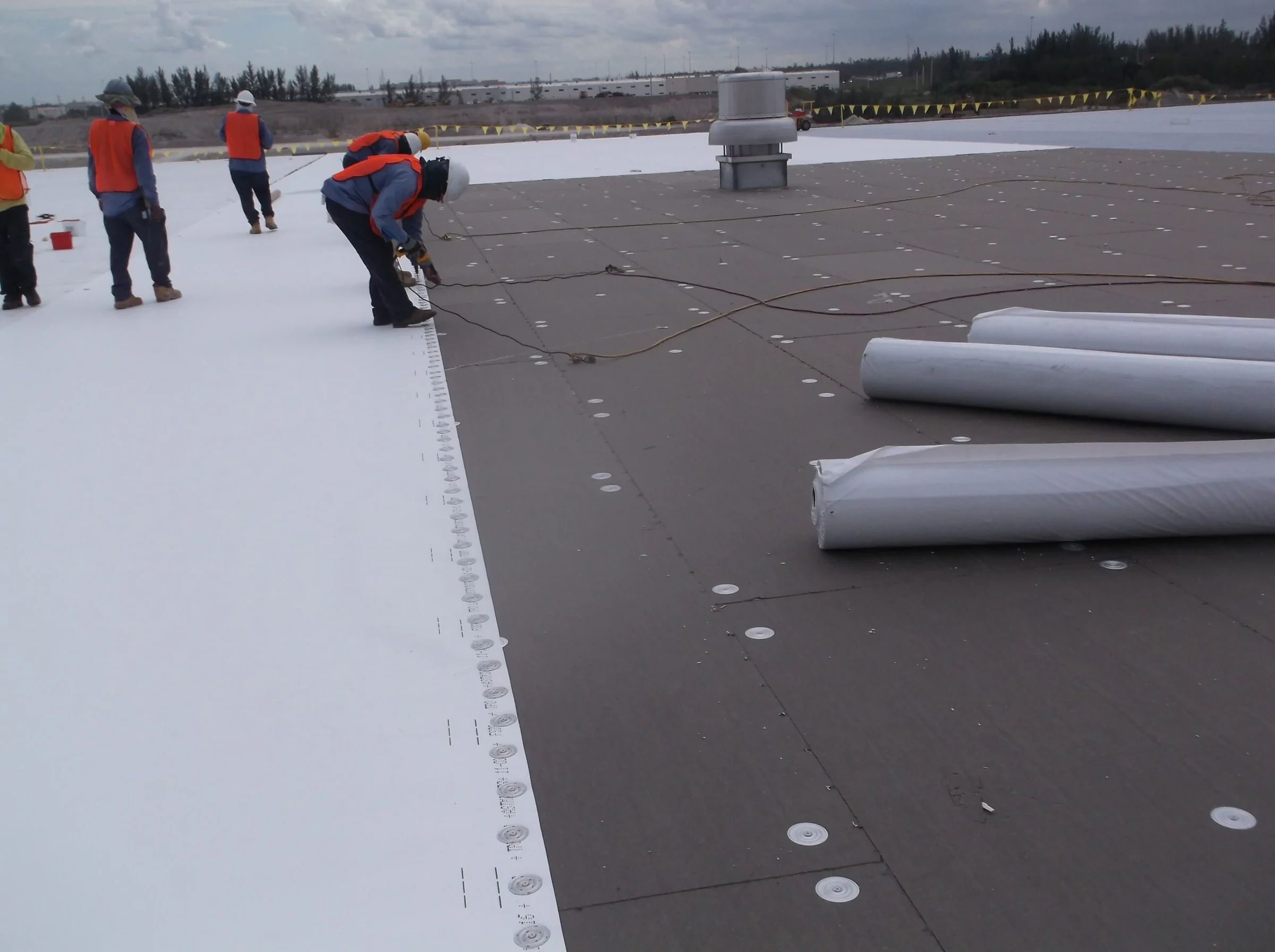
TPO and PVC Membrane Options
JM's single-ply line includes standard and reinforced TPO and PVC membrane in the common thickness range, with mechanically attached and fully adhered options. We evaluate their product against a building's specific deck, wind-uplift, and chemical-exposure requirements the same way we would any other manufacturer's line, rather than treating one brand as a default.
Reinforced JM membrane comes up most on roofs we expect to see regular foot traffic, buildings with several rooftop units and a maintenance crew making quarterly service visits, where the added scrim helps the membrane hold up under repeated mechanical stress at the same walk paths.
Modified Bitumen and Built-Up Roofing Materials
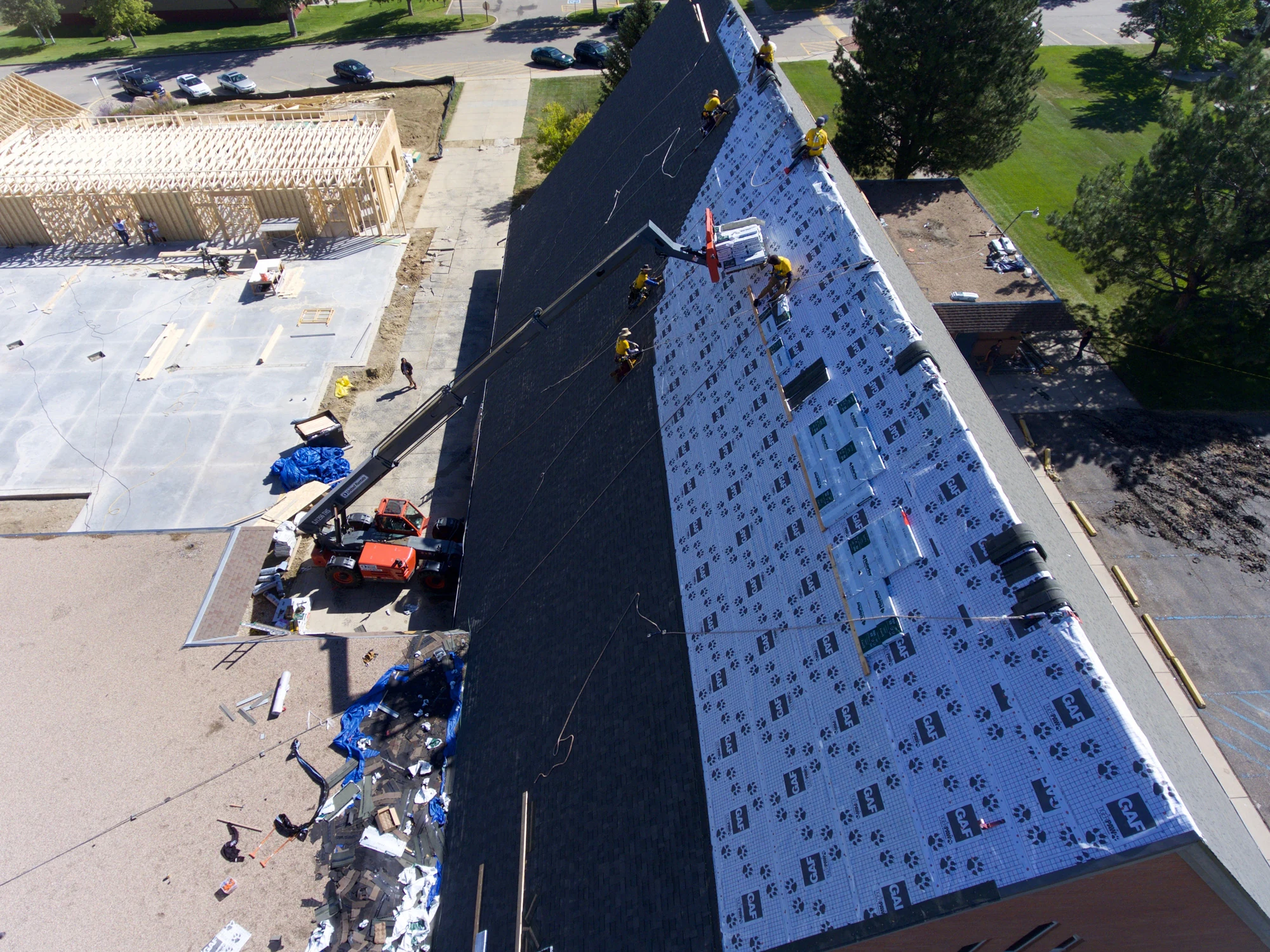
JM also manufactures SBS modified bitumen and built-up roofing components, relevant on the portion of Flint's older commercial stock, smaller strip retail and converted buildings, that still runs on asphalt-based roofing rather than single-ply. Where we're recovering an existing built-up roof rather than converting to membrane, having a manufacturer with strong products on both sides of that divide is a practical advantage.
It also means we can present an owner with a genuine like-for-like recover option alongside a single-ply conversion quote, rather than steering every project toward membrane simply because that's the only product line a narrower manufacturer would offer.
Insulation and Accessory Products
Insulation is a core part of JM's manufacturing business beyond roofing membrane, and their polyiso and cover board products are engineered to pair with their membrane lines. Matched-component assemblies simplify the warranty conversation, since there's no question about whether a mismatched product contributed to a failure down the line.
We spec their higher-density cover board on roofs where hail or heavy foot traffic is a real concern, and standard polyiso where the roof's exposure and use don't call for the added cost, rather than applying one insulation package across every project regardless of need.
Matching Product to Deck and Traffic Conditions
Steel bar-joist decks common on Flint's mid-century manufacturing and warehouse buildings behave differently under a mechanically attached membrane than a poured concrete deck does, and JM's range of attachment methods gives us room to match the assembly to the deck rather than the deck to a fixed product choice. We confirm deck type and condition before recommending a specific JM system.
Rooftop traffic matters too. A building with routine service walks to multiple HVAC units gets a different membrane thickness recommendation than a roof nobody accesses outside of an annual inspection, even if both buildings are otherwise similar.
- Membrane type matched to deck and chemical exposure
- Insulation R-value and cover board density for the assembly
- Attachment method against wind-uplift requirements
- Compatibility with existing built-up roofing where recovering
- Detail drawing match at irregular parapet and curb conditions
- Field inspection completed before warranty issuance
Detail Drawings on Complex Older Roofs
JM publishes standard flashing and termination details, and we build to those drawings on any project specifying their materials. On Flint's older converted industrial buildings, non-standard curb heights, filled-in skylights, and irregular parapet conditions from decades of modification mean field judgment plays a bigger role in matching the installed detail to the published drawing than it would on a straightforward new building.
Where an as-built condition genuinely doesn't match any published drawing, we document the deviation and the reasoning behind the detail we used, rather than forcing a standard drawing onto a condition it wasn't written for.
What Warranty Coverage Depends On
A JM NDL warranty requires the same fundamentals as any major manufacturer's: installation matched to the published details and a field inspection before issue. We document the completed assembly and the inspection sign-off for every JM-specified project, which is the record an owner needs on hand if a warranty or storm-related question comes up later.
We keep that documentation organized by roof section rather than as one general file, so if a specific area of a large roof ever needs attention, the assembly record for that exact zone is easy to pull rather than searching through paperwork covering the whole building.
Questions About Johns Manville Roofing Products
Does Johns Manville make anything besides single-ply membrane?
Yes. Alongside TPO and PVC, JM manufactures SBS modified bitumen, built-up roofing components, and insulation products, which matters on Flint buildings where an older asphalt-based roof is being recovered rather than converted to single-ply.
Why would you recommend JM over another manufacturer?
When their product range, current lead times, and warranty terms fit a specific building better than the alternatives we're comparing. We don't default to one manufacturer across every project.
Can JM materials be used to recover an old built-up roof?
Often yes, since their built-up and modified bitumen product lines are built for that kind of recover work, in addition to their single-ply options for buildings converting to membrane.
What insulation options does JM offer for a roof assembly?
Polyiso and cover board products engineered to pair with their membrane lines, which we spec together as a matched assembly when JM membrane is the chosen product.
How do you handle unusual roof shapes with JM's detail drawings?
We match the installed flashing and termination detail to JM's published drawings as closely as the existing conditions allow, and where a building's history has created a non-standard condition, that takes more field judgment than a standard install.
Related
Ready to review the roof scope?
Let’s Talk About Your Commercial Roof
Share the building, roof history, known leaks or damage, access constraints, and schedule. We’ll start with the roof condition and the facility below it.